
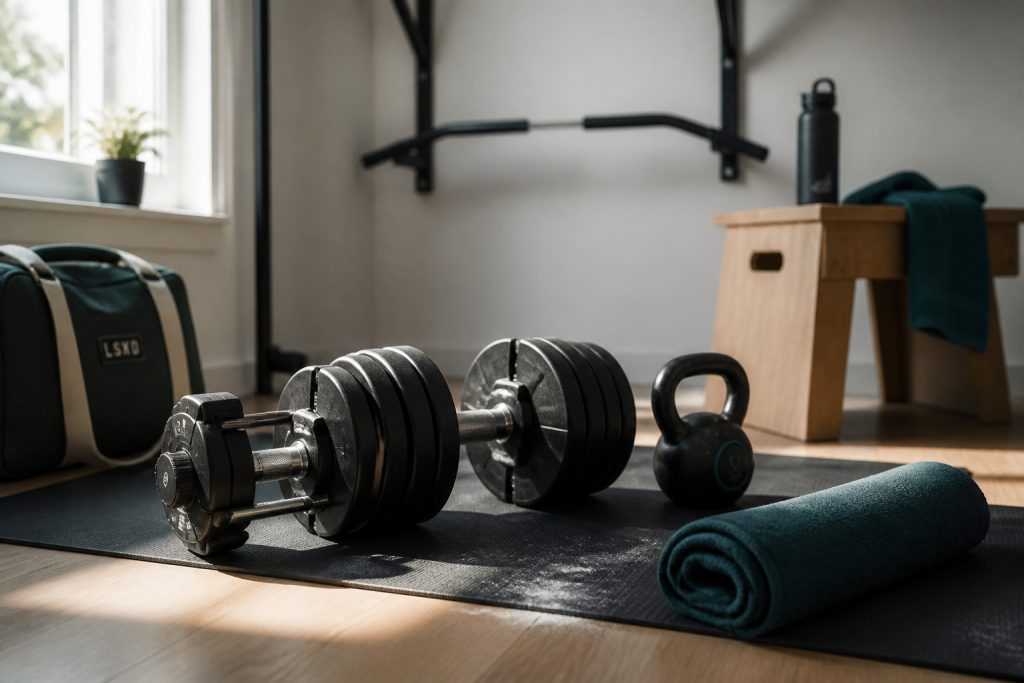
My belly trimmed before my jeans did. I started with 20 minutes of doable moves and saved $600 by skipping machines. This list gives you 20 beginner lower belly workouts for beginners you can do at home, most under $50 and a few splurges around $150. These are equipment-light, progressive, and honest about what actually changes your midsection.
The focus here is core control, not magic spot reduction. Most options are under $50, with a couple of gear picks near $150 for people who want fast scaling. Suits beginners, small-space lifters, and anyone who prefers simple, repeatable progressions. I’ve noticed more folks mixing bands and sliders in 2025 than before.
1. Hollow Body Hold (No Gear)
Style: Strength | Budget: Free | Best For: Absolute beginners

This is the first result: more abdominal tension in less time. Lie flat, squeeze ribs to hips, tilt pelvis, and hold 10 to 30 seconds. I started at 10 seconds and added 5 seconds every week. The ugly truth: most people drop their low back and blame their abs. Tip: press your lower back to the floor, breathe, and regress by bending knees. Do 3 rounds of 4 reps. I saw better control in four weeks.
Shop this idea:
2. Dead Bug Progression
Style: Mobility & Stability | Budget: Free | Best For: Beginners with low-back sensitivity

The trick is coordination and pelvic control, not reps. Start arms up, opposite leg bends 90 degrees, extend slowly while keeping lower back anchored. I used a light ankle weight when it stopped being hard, roughly 1 lb to 3 lb. Practical cue: move slowly, count four-down, four-up. Price hint: ankle weights cost around $12 to $30. I used a thrifted pair first and it was a solid lesson in progression.
Shop this idea:
3. Reverse Crunch on a Mat
Style: Strength | Budget: Free | Best For: Beginners who feel lower-quadrant strain with sit-ups

Reverse crunches shift emphasis down low without neck strain from sit-ups. Keep knees bent, curl hips off the floor using lower-abs, not momentum. I told myself to stop yanking with legs; that was my mistake. Tip: aim for 10 reps, 3 sets, then add 5 reps each week. Tried weighted reverse crunches with a 6 lb medicine ball for a month and felt the difference.
Shop this idea:
4. Lying Leg Raises With Slow Eccentrics
Style: Strength | Budget: Free | Best For: Beginners building confidence before hanging raises

Lower slowly. The eccentric phase builds strength in the lower belly. Lie tall, hands under hips, raise legs to 90 degrees, lower for a count of 4 to 6. I started with bent knees to protect my lumbar. Price anchor: a quality mat helps, around $20 to $60. Ugly truth: too many people swing legs and blame genetics; slow lowers fix that.
Shop this idea:
5. Flutter Kicks (Beginner Tempo)
Style: Conditioning | Budget: Free | Best For: Short conditioning bursts and endurance

Flutter kicks spike heart rate while taxing the lower abs. Keep movement small and controlled, toes pointed, lower back glued to mat. I do 30 seconds on, 30 seconds off for 6 rounds when short on time. Tip: add ankle weights (1 lb) for progression. Price note: ankle weights are cheap, around $12 to $30. Ugly truth: longer sets with poor form just fatigue your hip flexors, not your abs.
Shop this idea:
6. Scissor Kicks With Support
Style: Strength | Budget: Free | Best For: Those with lower-back sensitivity

Keeping hands under glutes reduces lumbar strain. Cross legs with controlled tempo, goal 3 sets of 20 crossings. I made the mistake of overextending legs early and felt low back ache for days. Progress with bent knees first. No equipment necessary, but sliders make a progressed version doable.
Shop this idea:
7. Mountain Climbers With Elevated Hands
Style: Conditioning | Budget: Free | Best For: Beginners building cardio and core together

Elevate hands on a step to decrease scramble and increase core focus. Drive knees toward chest with a controlled cadence. I used the bottom stair for two weeks before dropping to floor. Start with 20 seconds on, 40 seconds rest, 6 rounds. Tip: keep hips low and steady. Mountain climbers also burn calories, which helps with overall fat loss; CDC recommends 150 minutes weekly for health-focused activity.
Shop this idea:
8. Plank Knee Tucks Using Sliders
Style: Strength & Conditioning | Budget: Under $30 | Best For: Progressing from static planks

Sliders let you pull knees to chest from a plank, isolating lower abs. Start in forearm plank and slide knees in slowly. I bought cheap sliders for $12 to test the move, then upgraded after I committed. Form cue: don't let hips sag. Tip: 8 reps, 3 sets. If sliders are too smooth, try towels on hardwood.
Shop this idea:
9. Standing Band Knee Drives
Style: Mobility & Core | Budget: Under $20 | Best For: Those who hate floor work

Attach a medium loop band low and drive knee up into resistance while balancing. This mimics cable knee drives without a machine. I found one at Dick's on clearance for $12 and kept it. Tip: keep torso tall and avoid leaning back. Bands are cheap and scale from $8 to $30 depending on brand. Great for quick core-blast intervals.
Shop this idea:
10. Seated Russian Twist With Light Medicine Ball
Style: Strength | Budget: Under $30 | Best For: Rotational control and obliques

Russian twists target obliques but help lock in lower belly stability. Start with a 6 lb medicine ball, feet on floor, torso angled back 30 degrees. I used too-heavy balls early and leaned on momentum; lighter is smarter. Tip: keep movement tight and controlled, 12 to 20 reps per side. Medicine balls usually run around $20 to $50 depending on weight.
Shop this idea:
11. Incline Reverse Leg Raises (Using Bench or Step)
Style: Strength | Budget: Under $60 | Best For: Beginners stepping up from floor work

Using a low bench gives more range and a gentler spine angle for reverse raises. Grip the bench behind you, tuck knees, and lift hips. I found a foldable bench for $55 and used it for weeks before buying a heavier one. Tip: control the descent. Benches for home run about $40 to $120. This felt like a clear upgrade from flat-floor reverse crunches.
Shop this idea:
12. Captain’s Chair Alternative (Two Chairs)
Style: Strength | Budget: Free to under $40 | Best For: No-machine hanging leg raise alternative

When you lack a dip station, pair two sturdy chairs and brace. Press shoulders down, lift knees slowly. Do this only if chairs lock together safely. I tried it once and nearly had a wobble; secure the chairs to a wall first. Tip: start with bent-knee raises and aim for 8 to 12 controlled reps. Chairs are free, but take care.
Shop this idea:
13. TRX Low Tucks (Suspension Trainer)
Style: Strength & Stability | Budget: $100 to $160 | Best For: Scalable core work at home

A suspension trainer lets you progress from leaning tucks to full pike tucks. I bought a TRX knockoff for $110 and it lasted for two outdoor seasons. Tip: keep shoulders packed, hips stable, and tuck with control. Price range for a solid suspension trainer is $100 to $160. Ugly truth: some brands fray quickly; pick one with reinforced stitching.
Shop this idea:
14. Hanging Knee Raises (Pull-Up Bar)
Style: Strength | Budget: Under $40 to $80 | Best For: Beginners ready for vertical loading

Hanging removes lower-back pressure and increases lower-abs demand. Use a doorway bar rated for your weight, tuck knees, and avoid swinging. I used a $35 bar that lasted a year; pro tip: check doorframe tolerance. Start at 6 to 8 reps. Pull-up bars typically cost $30 to $80. Ugly truth: cheap bars sometimes damage frames, so secure properly.
Shop this idea:
15. Weighted Hip Tilt With Light Dumbbell
Style: Mobility & Strength | Budget: Under $75 | Best For: Transitioning to weighted core work

Hold a light dumbbell (5 lb to 15 lb depending on strength) at your chest and perform small hip tilts to drive lower abs. I started with a 10 lb dumbbell and felt the added load without compromising form. Tip: choose a weight you can control for 12 to 15 reps. Adjustable dumbbells let you tweak load from $100 to $300 depending on brand.
Shop this idea:
16. Kettlebell Figure-8 (Light Weight)
Style: Conditioning & Core | Budget: $30 to $80 | Best For: Hip drive and lower-core tension

A light kettlebell passed between legs engages lower abs to control the swing. I used a 12 kg kettlebell when I had decent hip control. Tip: keep a soft hinge and a tight core, and don’t overuse momentum. Kettlebells often range $30 to $80 for beginners. Ugly truth: heavy swings without form invite low-back issues quickly.
Shop this idea:
17. Ab Wheel Rollout (Scaled To Knees)
Style: Strength | Budget: Under $30 | Best For: Progressing anti-extension strength

Ab wheel results are real but technique matters. Roll from knees only, keep hips engaged, and limit range until you can maintain a neutral spine. I made the mistake of overreaching and flared my ribs; rehabbing that taught me to scale properly. Ab wheels cost around $12 to $35. Tip: stop the roll early rather than push into poor form.
Shop this idea:
18. Pilates Hundred (Lower-Belly Friendly)
Style: Mobility & Endurance | Budget: Free | Best For: Core endurance and breath control

Pilates Hundred isn’t flashy but it builds deep abdominal endurance. Legs in tabletop, small pump with arms, breathe in five out five for 100 pumps. I did this at the end of workouts and saw better core endurance within three weeks. Tip: keep ribs anchored and avoid neck strain. No equipment required, though a small ab mat gives neck support.
Shop this idea:
19. Farmer Carry With Tight Core
Style: Strength & Conditioning | Budget: Under $150 | Best For: Functional core stability and posture

Loaded carries force you to brace your core in a functional way. Hold a heavy dumbbell in one hand, stand tall, and walk 20 to 40 meters. I used a 35 lb dumbbell per hand and felt my lower abs tighten more than any machine. Tip: short walks, 3 to 5 rounds, and focus on breathing. Adjustable dumbbells range $100 to $300. Ugly truth: carrying bad posture with weight is worse than carrying nothing.
Shop this idea:
20. Short HIIT Core Circuits (3 Moves Mix)
Style: Conditioning | Budget: Under $50 | Best For: Fat-loss-friendly core sessions

Short circuits combine core moves and cardio for calorie burn and abdominal demand. Example: 30 seconds mountain climbers, 30 seconds flutter kicks, 30 seconds plank knee tucks, 3 rounds. HIIT helps overall fat loss which is necessary because spot reduction is a myth according to the Mayo Clinic. I paired these with daily steps and saw steady change. Tip: pick three moves you can do well and increase rounds.
Shop this idea:
What You'll Need to Get This Setup
Strength & Free Weights
- Adjustable dumbbell pair 5 to 52 lb around $100 to $300
- 12 kg kettlebell cast iron around $30 to $80
- Light medicine ball 6 lb around $20 to $50
Cardio & Conditioning
- Sturdy plyo step 6 inch around $25 to $80
- Doorway pull-up bar around $30 to $80
Mobility & Recovery
- Foam roller 12 inch around $20 to $60
- Pilates core mat 8 mm around $20 to $60
Apparel & Accessories
- Non-slip yoga mat around $20 to $60
- Light ankle weights 1 lb pair around $12 to $30
Budget Swaps
- Exercise sliders pair (cheaper than machines, works on hardwood)
- Loop resistance band set (use instead of cable stacks)
- Similar used adjustable dumbbells or kettlebells often appear on Facebook Marketplace for less
Shopping Tips for These Setups
Buy during end-of-season sales: Many fitness brands clear inventory after New Year and around Labor Day, wait and save 20 to 40 percent. See adjustable dumbbells around $100 to $200 during sales.
Mix used plus new: Snag used metal kettlebells and pair them with new bands for hygienic, affordable scaling.
Check stitching on straps: For suspension trainers, inspect reinforced stitching and load ratings before purchase. Suspension trainer kit often lists specs.
Avoid gimmicks: Vibration belts and “targeted fat” gadgets rarely move the needle compared with consistent work and caloric balance. Read customer photos and returns.
Buy sliders not fancy machines: Sliders and bands mimic cable work for under $30 and travel well. Exercise sliders pair is a great test purchase.
Seasonal timing: Black Friday and spring clearance give you the best chance at premium gear like adjustable dumbbells near $100 to $200.
Frequently Asked Questions
Q: Will these moves melt lower belly fat alone?
A: No. Local fat loss is a myth per the Mayo Clinic, you need overall calorie balance and cardio alongside these moves. Pair with HIIT circuits and daily steps. Try the short HIIT core circuits and a set of resistance bands to start.
Q: How often should a beginner train lower abs?
A: Two to three focused sessions per week plus general activity is ideal. Start with 15 to 20 minutes per session and progress duration gradually. Use a non-slip yoga mat for comfort.
Q: Are ab rollers safe for beginners?
A: They can be if scaled. Roll from knees and stop before spine extension breaks. Ab wheels are cheap for testing. Consider the ab wheel rollout trainer.
Q: What gear is worth splurging on?
A: A solid set of adjustable dumbbells and a sturdy suspension trainer are worth the spend if you train consistently. Expect $100 to $300 for reliable adjustable dumbbells like the adjustable dumbbell pair 5 to 52 lb.
Conclusion
Start cheap, start consistent. Pick one or two moves from this list and build a 15-minute routine you can repeat three times a week. My tip: begin with dead bugs and hollow holds, then add small weights after four weeks. Which move do you want to try first — hollow holds or sliders?

