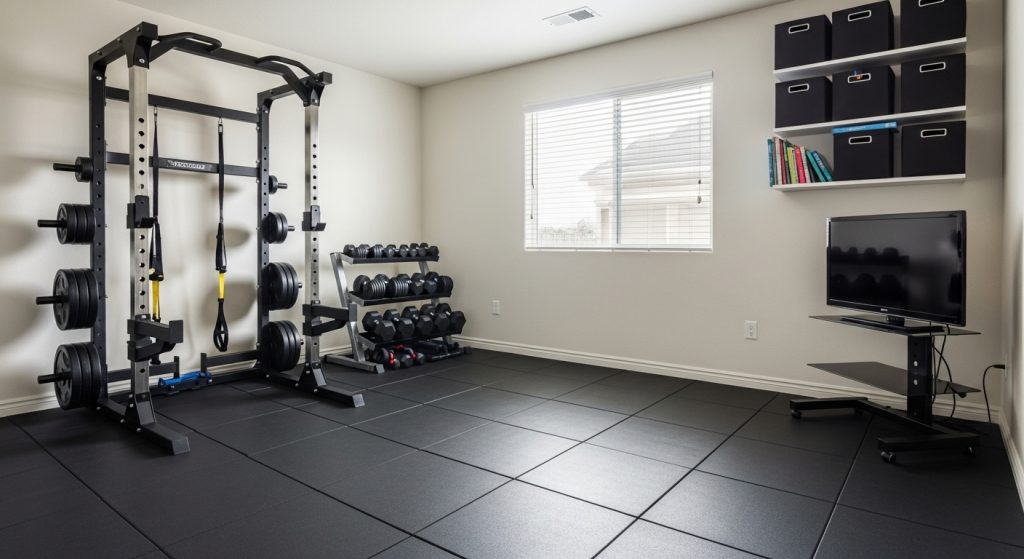
My first home gym felt like a storage closet. It was concrete, cluttered, and I skipped the mirror. After $420 in flooring, mirrors, and a pegboard system, I finally want to work out there. The space now feels purposeful. I check form, grab gear easily, and the lighting makes early mornings less painful.
This guide shows how to decorate a stylish home gym that boosts motivation. Style: modern industrial with warm wood and moody color. Realistic budget: $300–$1,200 depending on gear. Works for a garage conversion, spare room, or compact apartment corner. I lean into circadian-friendly LED accents and clear functional zones—trending for 2026 home gyms.
What You'll Need for This Look
Foundation pieces:
- Rubber interlocking gym flooring tiles, 2×2 ft black (~$80-150 for a 32 sq ft starter kit)
- Full-length mirror 72×24 wall mirror (~$120-250)
Mats & recovery:
- Manduka Pro yoga mat, 71×26 in, black (~$100-140)
- Liforme alignment yoga mat, 72×26 in (~$120-180)
Storage & organization:
- Pegboard wall panel kit with hooks (~$60-120)
- Magnetic strip for small gear (~$12-25)
Equipment accents:
- Adjustable dumbbells set (~$150-350)
- Kettlebell set (pair), vinyl-coated (~$40-120)
Lighting & tech:
- Hexagonal LED light panels (~$120-260)
- Circadian LED strip lights, tunable white-to-amber (~$40-120)
Finishing touches:
- Dry-erase wall sticker large, whiteboard sheet (~$30-70)
- Woven storage baskets, set of 3 (~$35-60)
- Artificial fiddle leaf fig, 4-5 ft in cement pot (~$70-120)

Start with the foundation: flooring and mirrors

Flooring and mirrors decide how the room feels and how usable it is. I started with rubber interlocking tiles because they dampen sound and protect concrete. Lay tiles so the workout zone is a clear rectangle. I left 6–8 inches at the wall for baseboard access. For a 10×10 room, a 32–36 sq ft kit covers the core area.
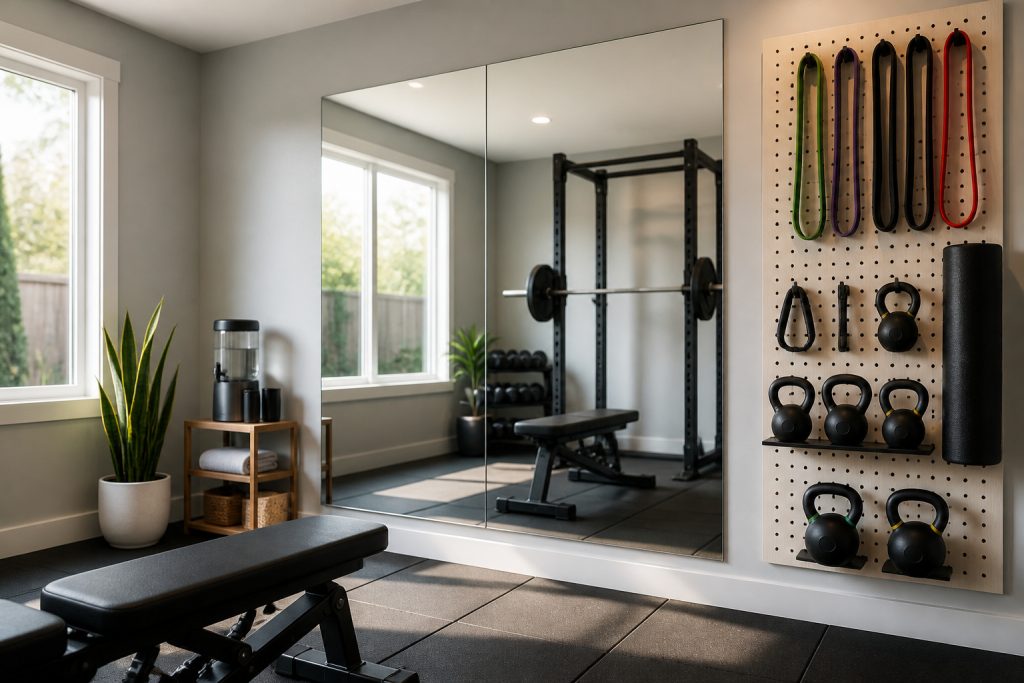
Next add a full-height mirror. I used a 72×24 full-length mirror mounted flush with the floor. Position it across from the window or light source. That doubles perceived space and lets you check form. Avoid tiny mirrors; they read cheap and don’t help posture. The mistake I made: installing a too-small mirror off to the side. I moved it and the room felt instantly more professional.
Create energy with walls, art, and goal trackers

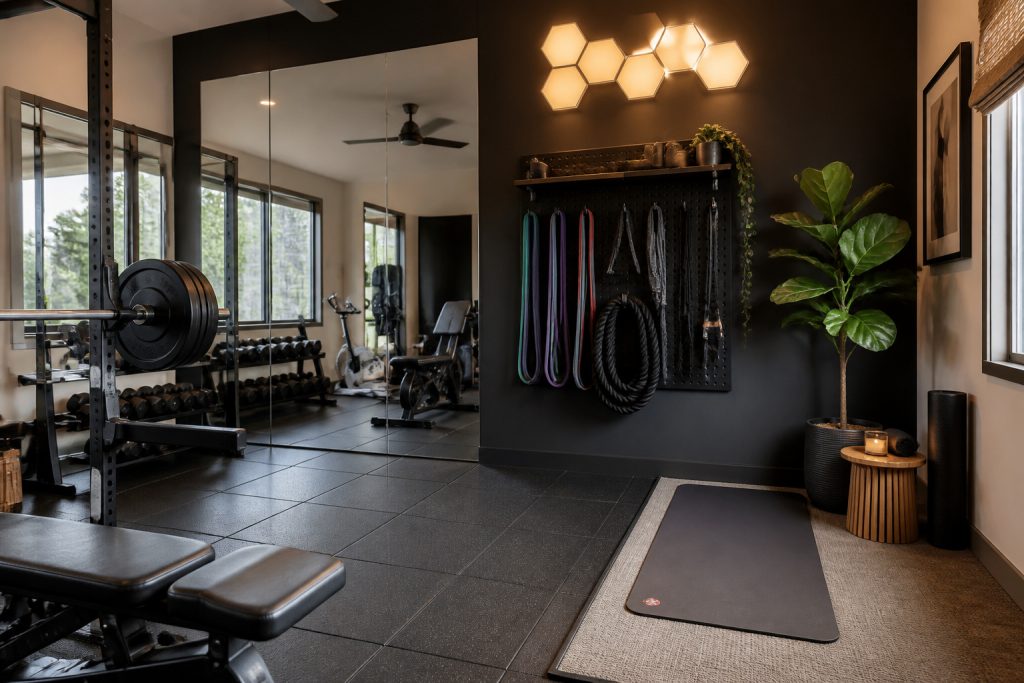
Walls set the mood. For an immersive feel I recommend a charcoal or indigo accent wall—use it only on one side so the space stays bright. Paint budget: $40–$70. Add a large dry-erase wall sticker for tracking PRs and weekly goals. I pin a one-month program to mine.
For visual interest, hang framed progress photos or a medal display. I use a slim magnetic strip near the pegboard for gloves and trackers. Above the recovery corner, install hexagonal LED panels and link them to a warm-white scene for evening stretches. Bright cool light for cardio; amber-toned for cooldowns. The trick is to make the wall feel intentional, not cluttered.
Layer in storage and comfort: pegboards, benches, and recovery zones

Organization is part of motivation. I installed a pegboard wall panel kit and learned to group gear visually. Place heavier items low. Hang jump ropes, bands, and a kettlebell in odd-number groupings. I paired the pegboard with woven baskets for small items.
Add a short bench (36 inches) with drawers for towels and tracking sheets. For the floor recovery zone, use the Manduka Pro mat for rolling and mobility. I tried open shelving first and it looked messy. The pegboard made the difference—tools are visible but neat. Keep one shelf for personal items like a water bottle and a small speaker.

Common Styling Mistakes to Avoid
Mistake: Leaving equipment on the floor
Why it doesn't work: It reads chaotic and makes the room smaller.
Do this instead: Mount hooks and use pegboard kits and woven baskets for neatness.
Mistake: Too many dark walls
Why it doesn't work: The gym feels cave-like and drains energy.
Do this instead: Use one [charcoal accent wall] and balance with light elsewhere. If you go dark, add tunable LED strips to keep mood up.
Mistake: Skipping a real mirror
Why it doesn't work: Poor form and zero feedback.
Do this instead: Install a full-length mirror at floor level for true form checks.
Shopping Guide: Where to Find These Items
- For durable flooring: search Amazon for rubber interlocking tiles. Good kits include a small trim pack.
- For yoga/recovery mats: check brand pages for Manduka and Liforme. I splurged on Manduka for longevity.
- For smart lighting: search hexagonal LED panels or circadian LED strips for tunable scenes.
- For storage that looks intentional: pegboard panel kits and magnetic strips keep gear visible and tidy.
I recommend starting with the floor and mirror. Once those two are right, other elements fall into place. I swapped my small mirror for a full-length one and it changed how I train. Which part of your gym will you change first?