
how to tighten lower stomach was the question I asked after losing 12 lb but still seeing that lower belly pouch.
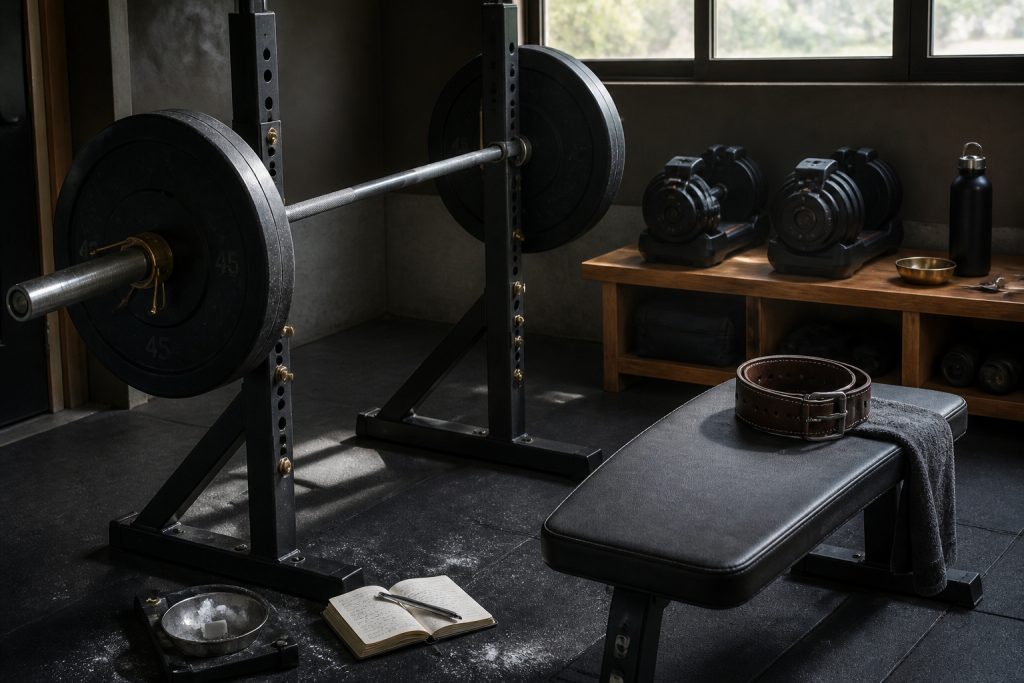
I spent $350 reworking a corner of my garage into a high-impact 10-minute circuit zone and finally closed that stubborn gap in my shirts in eight weeks. This guide shows the exact setup, gear, and routines that made it work for me on a tight budget.
My vibe was compact, functional, and mobility-friendly—think garage gym that breathes.
Budget: around $300 to $600 from scratch, under $200 to refresh what you already own.
This suits people who do short, intense circuits, bodyweight progressions, and barbell or kettlebell work. Lately I’ve noticed everyone switching to adjustable dumbbells and compact racks for small spaces.
Research note: you cannot spot-reduce fat (American Council on Exercise). Also short high-intensity circuits improve metabolic rate and abdominal strength more than steady-state cardio (Sports Medicine review).
1. Start with the Foundation: Flooring and Rack Setup

Get flooring and a rack right and the rest falls into place.
Lay down heavy duty rubber gym flooring tiles first. They protect concrete, deaden sound and anchor the visual weight of a power rack. I used 3/4 inch thick tiles so dropping a loaded barbell does not jar the neighbors.
If you have overhead space, a foldable squat rack with pull-up bar keeps the footprint small and gives safe rack pulls and pull-ups. Position the rack centered on the tiles and leave at least 3 feet of clearance behind the rack for rack pulls and plate loading.
Common mistake: buying thin foam mats. They wrinkle and allow plates to scuff the floor. Do this instead: invest in heavy duty rubber tiles. Heavy duty rubber gym flooring tiles around $80 to $200.
2. Layer in Free Weights and Storage

The second layer is where the training happens: barbell, plates, and dumbbells.
A 20 kg Olympic barbell with knurled steel shaft feels tight in the hands and teaches proper hip drive for circuits. Pair it with a bumper plate pair 45 lb for safe drops during quick complexes.
Adjustable dumbbell pair 5 to 52 lb save space and let you ramp load fast between rounds. Store weights on a simple plate tree or low shelf so transitions stay under 10 seconds.
Spacing rule: keep the bench parallel to the rack with 18 inches between bench edge and rack legs for sled-style moves and rollouts.
Mistake people make: stacking plates on the floor. That kills flow and looks messy. Use a plate tree or wall peg. Plate tree storage stand around $50 to $120.
3. Add Conditioning and Mobility Tools

Conditioning and mobility tools turn strength sessions into targeted lower abs work.
Kettlebell 16 kg swings force hip hinge and posterior chain engagement, which helps flatten the lower belly by improving posture and metabolic demand. Add a jump rope speed cable for short cardio bursts and a resistance band set with handles for banded leg raises and Pallof presses.
For mobility, a firm 18 inch foam roller and a lacrosse ball attack tight hip flexors and oblique attachments that hide lower ab definition.
Place the mat within arm’s reach of the bench and rack so circuits flow bench-to-floor-to-stand. Keep bands hung on wall hooks for quick swaps.
Ugly truth: those tiny ab rollers alone will not cut the lower belly. Use them as accessories, not the main tool. Resistance band set with handles approx $20 to $40.
4. Finish with Lighting, Mirrors, and Atmosphere

The last layer makes the space usable and motivating.
Hang a 48 by 36 inch wall mirror to check pelvic tilt and hollow body positions during hollow holds and leg raises. Good lighting matters; a cool LED shop light over the rack keeps movement crisp on video and in real time.
A brass chalk bowl, small wall hook system for bands, and a tidy storage shelf make the space feel finished and reduce excuses.
Mistake: putting a full-length mirror directly opposite a window creates glare. Angle the mirror slightly and use diffused LED panel lighting. Wall mirror 48 by 36 inch around $80 to $180.
Common Setup Mistakes to Avoid
Mistake: Pushing the rack flat against the wall to save space
Why it doesn't work: No room for pull-ups, safety pin clearance, or plate loading.
Do this instead: Leave 3 feet of clearance behind the rack. Compact foldable squat rack with pull-up bar around $250 to $600.
Mistake: Buying single-weight dumbbells for every increment
Why it doesn't work: Clutters small spaces and limits progressive overload.
Do this instead: Use an Adjustable dumbbell pair 5 to 52 lb around $300 to $450.
Mistake: Relying only on ab machines and crunches
Why it doesn't work: Machines fail to build full-body tension needed for a flat lower belly.
Do this instead: Prioritize loaded carries, kettlebell swings, and circuit intervals. Kettlebell 16 kg cast iron approx $30 to $70.
What You'll Need for This Setup
Foundation Pieces
Heavy duty rubber gym flooring tiles around $80 to $200
Foldable squat rack with pull-up bar around $250 to $600
Flat utility bench sturdy 1000 lb capacity around $80 to $180
Strength & Free Weights
20 kg Olympic barbell knurled steel around $90 to $250
Bumper plate pair 45 lb around $80 to $200
Adjustable dumbbell pair 5 to 52 lb around $300 to $450
Conditioning & Mobility
Kettlebell 16 kg cast iron approx $30 to $70
Speed jump rope cable with bearings approx $10 to $25
Foam roller firm 18 inch around $15 to $35
Finishing Touches
Wall mirror 48 by 36 inch around $80 to $180
Brass chalk bowl small approx $15 to $35
LED shop light adjustable brightness around $40 to $120
Budget Swaps
Standard cast iron plate pair 45 lb (used equivalent) around $40 to $80 (similar on Facebook Marketplace for less)
Basic adjustable dumbbells 5 to 40 lb around $150 to $300
Shopping Guide for This Setup
Buy during end-of-season clearance: Large retailers discount flooring and racks in late summer; check foldable squat rack around sale prices.
Used gear hack: Mix secondhand bumper plates with a new barbell for safety; search local listings then back it with 20 kg Olympic barbell if needed.
2025 trend tip: Equipment-lite circuits are growing; prioritize Adjustable dumbbell pair 5 to 52 lb for scalable programming.
Splurge vs save: Splurge on a good barbell and flooring; save on dumbbell stands and storage hooks. Heavy duty rubber gym flooring tiles around $80 to $200.
Conclusion
Start with one high-impact piece: the barbell or adjustable dumbbells. That single buy drives programming and gets you consistent 10-minute circuits for lower stomach tightening.
Keep the space tidy, prioritize flow, and track progress with photos and a logbook.
What's the one piece you'll buy first for your circuit corner?

