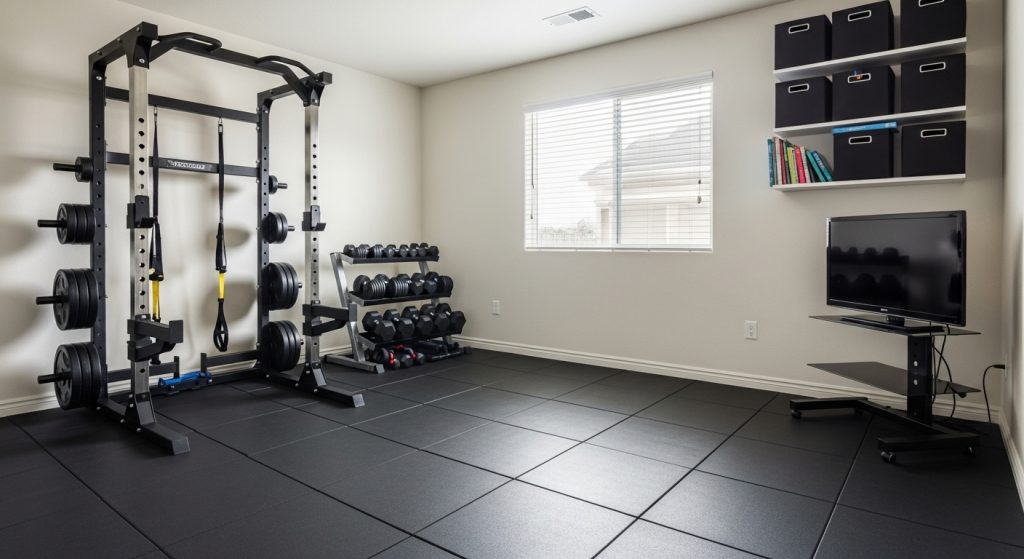
I used to treat my garage like a storage unit. Equipment ended up in piles. I wanted a functional gym that felt like a room. I spent about $450 over a few months and now get better workouts than my old commercial membership. The trick was choosing multi-purpose gear and making storage look intentional.
This guide is for minimalist/industrial home gyms. Budget: roughly $300–700 depending on what you keep. It works for garages, spare rooms, and living-room corners. Compact racks and adjustable dumbbells are the trending budget picks for 2026, so I leaned into those.
What You'll Need for This Look
Foundation pieces:
- 6×8 heavy-duty rubber gym mat, black (~$70-120) — protects floors and anchors the zone.
- 24×24 interlocking rubber floor tiles, set of 6 (~$40-80) — good for modular layouts.
Strength essentials:
- Adjustable dumbbells 55 lb pair, compact selectorized (~$200-350) — replaces a full rack of dumbbells.
- Adjustable weight bench, folding, multi-angle (~$120-200) — bench + incline press + step.
Barbell options (if you want to add later):
- 7 ft Olympic barbell, matte black finish (~$150-250)
- Black bumper plates pair, 25 lb (use multiple pairs to build) (~$60-120 each)
Multi-purpose extras:
- Cast iron kettlebell 35 lb, matte finish (~$50-80)
- Resistance band set with anchors and handles (~$20-35)
Storage & finishing touches:
- Vertical dumbbell stand / small equipment rack (~$80-150)
- Woven storage baskets, set of 3 (~$35-55)
- Full-length leaning mirror, 48×16 inches (~$70-140)
Budget-friendly swap:
- Skip bumper plates and get adjustable spinlock weight set (~$120-200) to save space and cost.

Start with the foundation: durable flooring and layout

The floor defines how the space feels and what you can do safely. I started with a 6×8 rubber mat as the core workout zone. Place it so you have about 18–24 inches of clear space on all sides for movement. If you plan to deadlift, expand with interlocking tiles under your bar path.
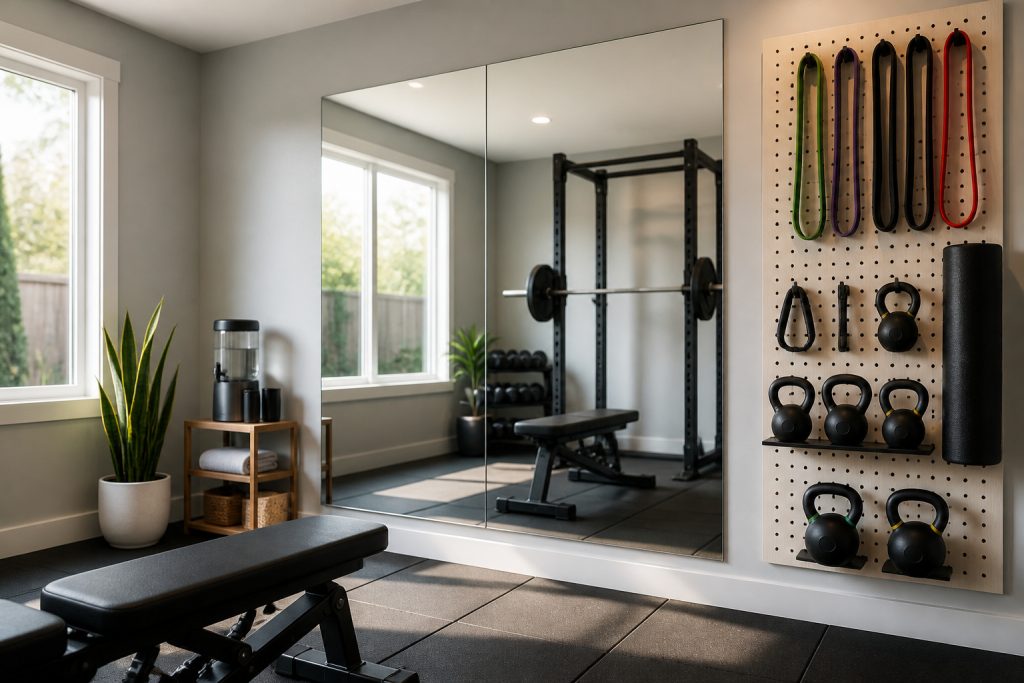
Put the mirror on a long wall opposite your main light source. I use a 48×16 leaning mirror to check form. It also makes the space read larger. The visual rule I followed: darker floor, lighter walls, one vertical anchor (mirror). Common mistake: mats too small. That creates awkward transitions. Go larger than you think.
Prioritize versatile equipment for full-body results

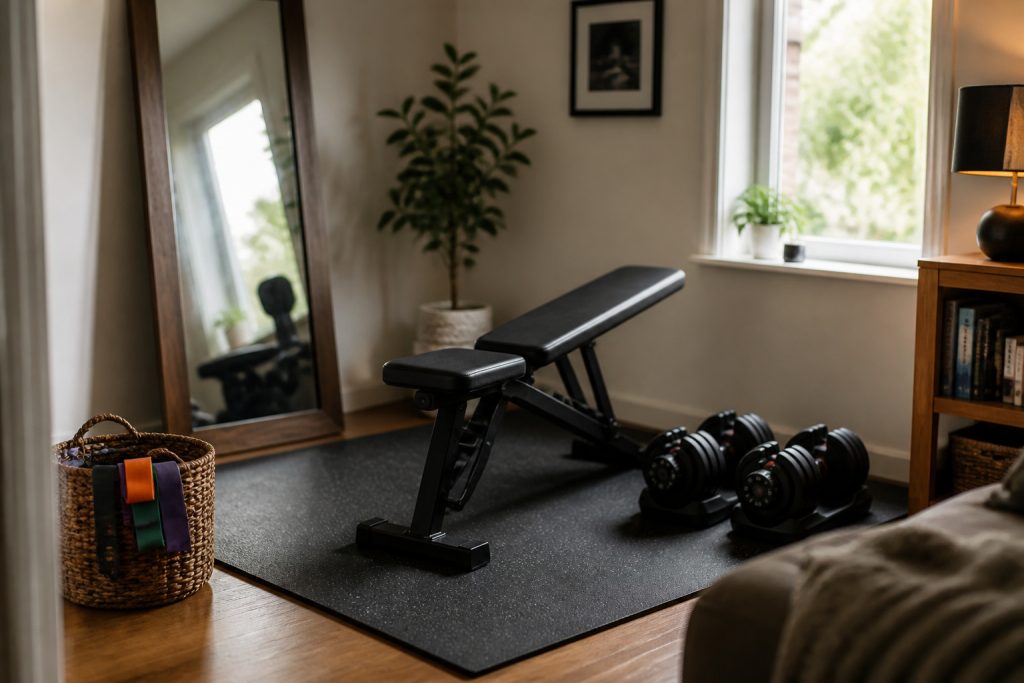
Start with gear that covers many moves. I focused on adjustable dumbbells plus a folding bench. Those two pieces cover pressing, rows, squats, lunges, and core work. I bought adjustable 55 lb dumbbells and a multi-angle bench. Then I added a 35 lb kettlebell and resistance bands set for accessory work.
I made a mistake early on: I bought a single-purpose leg machine that ate floor space and rarely got used. I sold it and bought kettlebells and bands. Much more usable. Visual principle: keep low pieces clustered and reserve vertical space for storage. That keeps sightlines open and workouts efficient.
Style storage and lighting so it reads like a room

How your gear is stored affects whether the gym feels chaotic. I use a vertical dumbbell stand and a small shelving unit for bands and wraps. Baskets hide jump ropes and chalk. A full-length mirror acts as décor and feedback.
Lighting matters more than most expect. Swap harsh fluorescents for a clamp lamp with a warm 2700K LED bulb. I added a work clamp lamp to brighten the bench area. Plants—real or faux—soften metal gear. I use a small faux olive tree in a cement pot to warm up the corner.
Keep finishes consistent. Matte black bars and storage read intentional. Too many finishes make it look like a discount store.
Common Styling Mistakes to Avoid
Mistake: Flooring that stops at the equipment edge
Why it doesn't work: It feels piecemeal and unsafe.
Do this instead: Use a 6×8 mat or tiles that cover movement paths.
Mistake: Buying single-use machines
Why it doesn't work: They take space and collect dust.
Do this instead: Choose multi-purpose pieces like adjustable dumbbells and a folding bench.
Mistake: Poor lighting and no mirror
Why it doesn't work: Workouts feel clinical and form suffers.
Do this instead: Add a clamp LED lamp and a leaning mirror.
Shopping Guide: Where to Find These Items
- For compact strength gear: check Amazon for adjustable dumbbells 55 lb that replace full sets.
- For budget plates: search black bumper plates or use a spinlock weight set.
- For renter-friendly racks: look for vertical dumbbell stands and freestanding plate trees.
- For flooring deals: compare interlocking rubber tiles and full mats to match your layout.
- For lighting and finishing touches: clamp lamps and woven baskets style the space affordably.
I started by buying just a mat and a pair of adjustable dumbbells. That single change made the space usable and kept me consistent. Which piece would you start with?