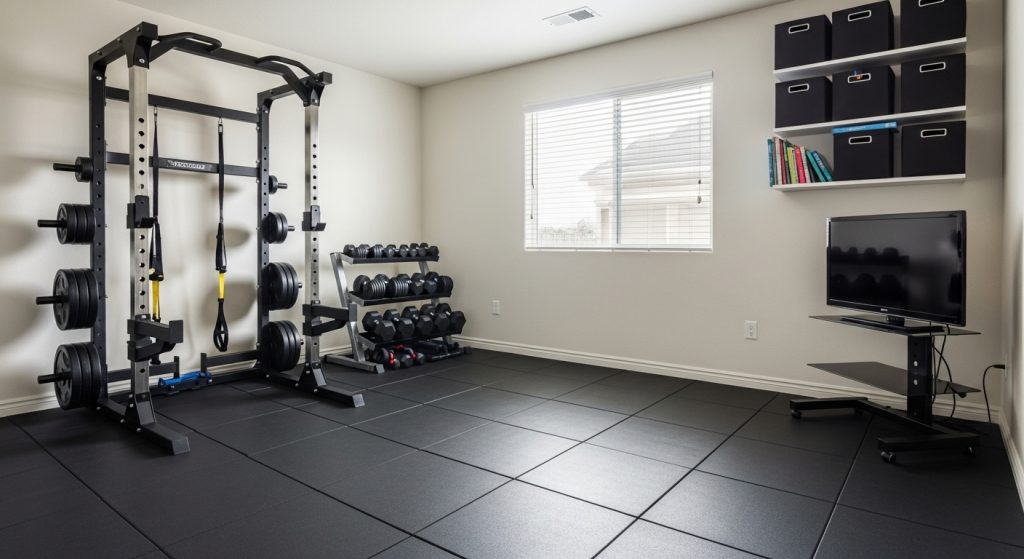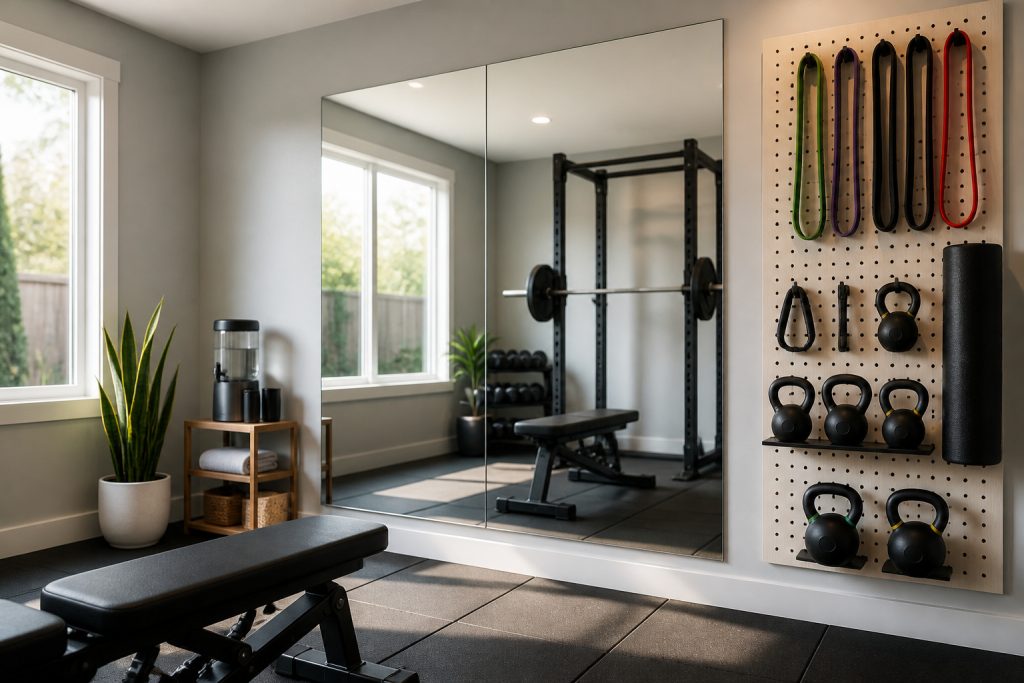

I lived with a cluttered basement gym for years — dumbbells in corners, a lone yoga mat, and no sense of flow. One weekend I painted the beams dark, added rubber tiles, and rearranged equipment into zones. Suddenly workouts felt purposeful. These ideas helped me make a basement that’s both functional and easy on the eyes.
Quick context
I focused on modern-industrial and organic-minimal vibes. Budgets range from DIY under $100 to mid-range $200–$800 for bigger pieces. These ideas work for tight, low-ceiling basements and larger rec rooms. A few trend notes I leaned on: muted palettes, natural wood accents, and bright task lighting.
What You'll Need to Get This Look
Textiles & Soft Goods:
- Anti-slip yoga mat, 72×24 inch (~$25-50)
- Absorbent microfiber gym towels, set of 4 (~$20-30)
Flooring & Surfaces:
- Rubber gym floor tiles, 24×24 inch (~$2.50–$5/sq ft)
- Interlocking foam tiles, 36×36 inch (~$30–60)
Storage & Organization:
- Heavy-duty wall-mounted storage rack (~$80-150)
- Compact dumbbell rack, 3-tier (~$75-200)
Mirrors & Lighting:
- 36-inch large round wall mirror (~$70-150)
- LED recessed puck lights, pack of 6 (~$40-80)
Accessories & Greenery:
- 6-foot artificial fiddle leaf fig tree (~$60-120)
- Cable management hooks and straps (~$8-20)
Budget-Friendly Alternatives:
- Peel-and-stick wide plank vinyl flooring (~$1–$3/sq ft)
- Similar finds at Target or HomeGoods for baskets and small decor.
Zoned Layout With Cardio + Strength Areas
Style/Vibe: Industrial-Modern
Budget: $$ (under $300)
Best For: Multi-use basements
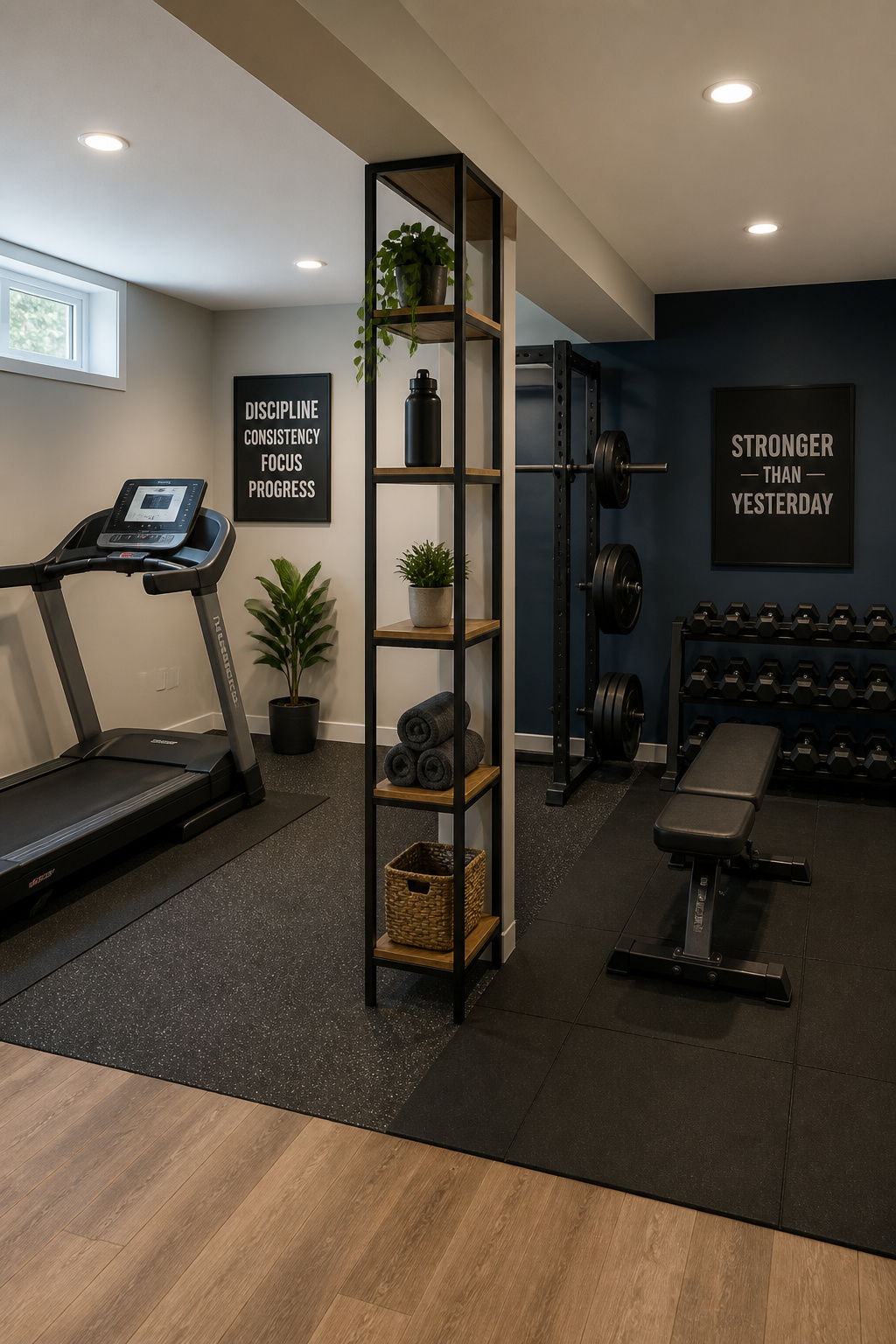
I split my basement into clear zones — treadmill and rower on one side, weights and mobility on the other. Rubber tiles under the weights and a narrow runner rug for cardio make the plan readable. I used a 3-tier dumbbell rack and rubber floor tiles. Tip: keep traffic lanes 30–36 inches wide. Mistake to avoid: clustering machines so you can’t access plates.
Painted Beams + Cameo White Walls for Contrast
Style/Vibe: Modern-Industrial
Budget: $ (under $150)
Best For: Low-ceiling basements
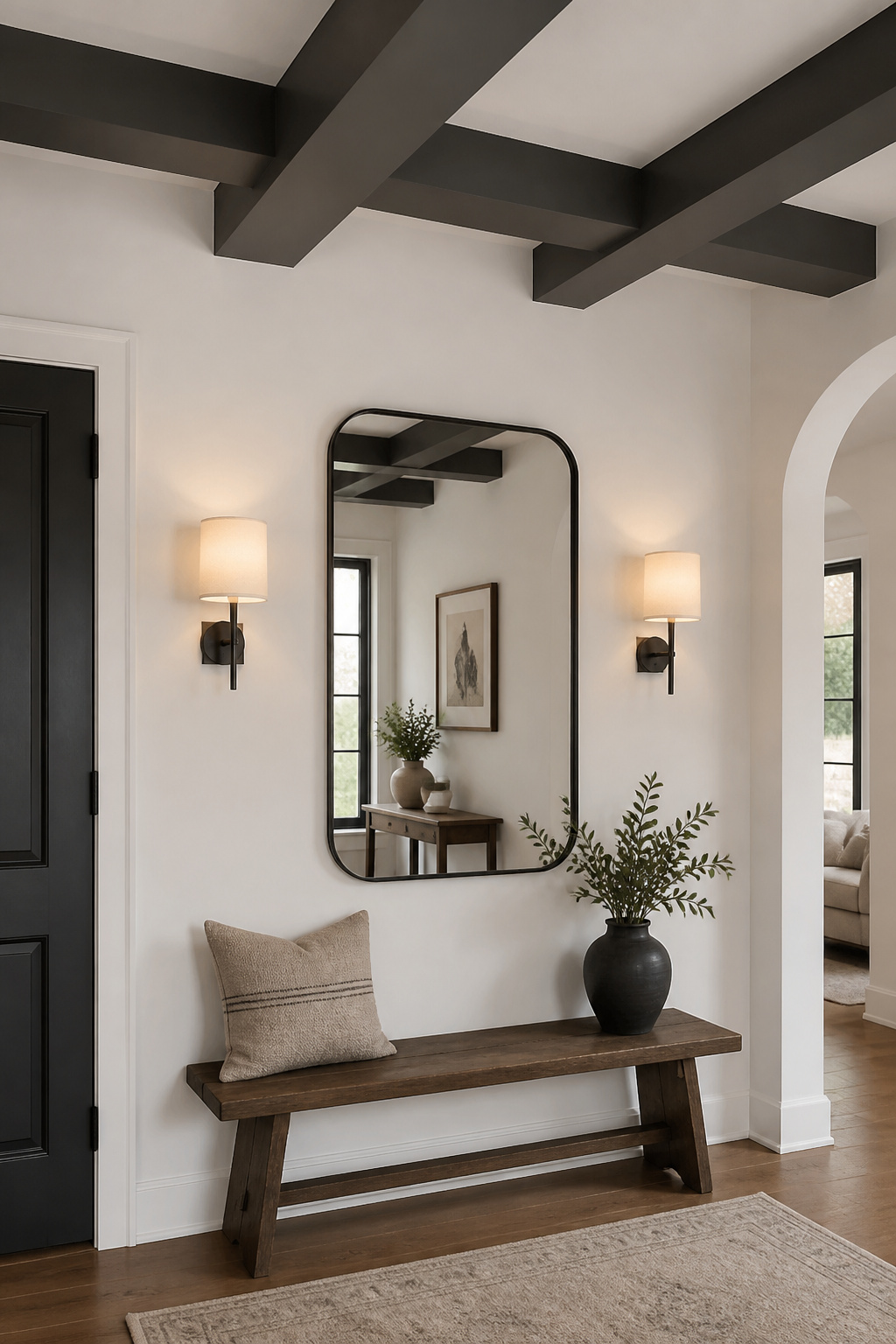
I painted ceiling beams dark to visually lower the ceiling and used a warm white on walls to keep the space bright. The contrast feels intentional and gives a gym a curated look. Paint choice matters; go with a semi-gloss on trim for easy cleaning. Mistake: too-dark walls without adequate lighting — add recessed LEDs.
Partial Mirror Wall With Framed Panels
Style/Vibe: Sophisticated Functional
Budget: $$ (under $200)
Best For: Small rooms
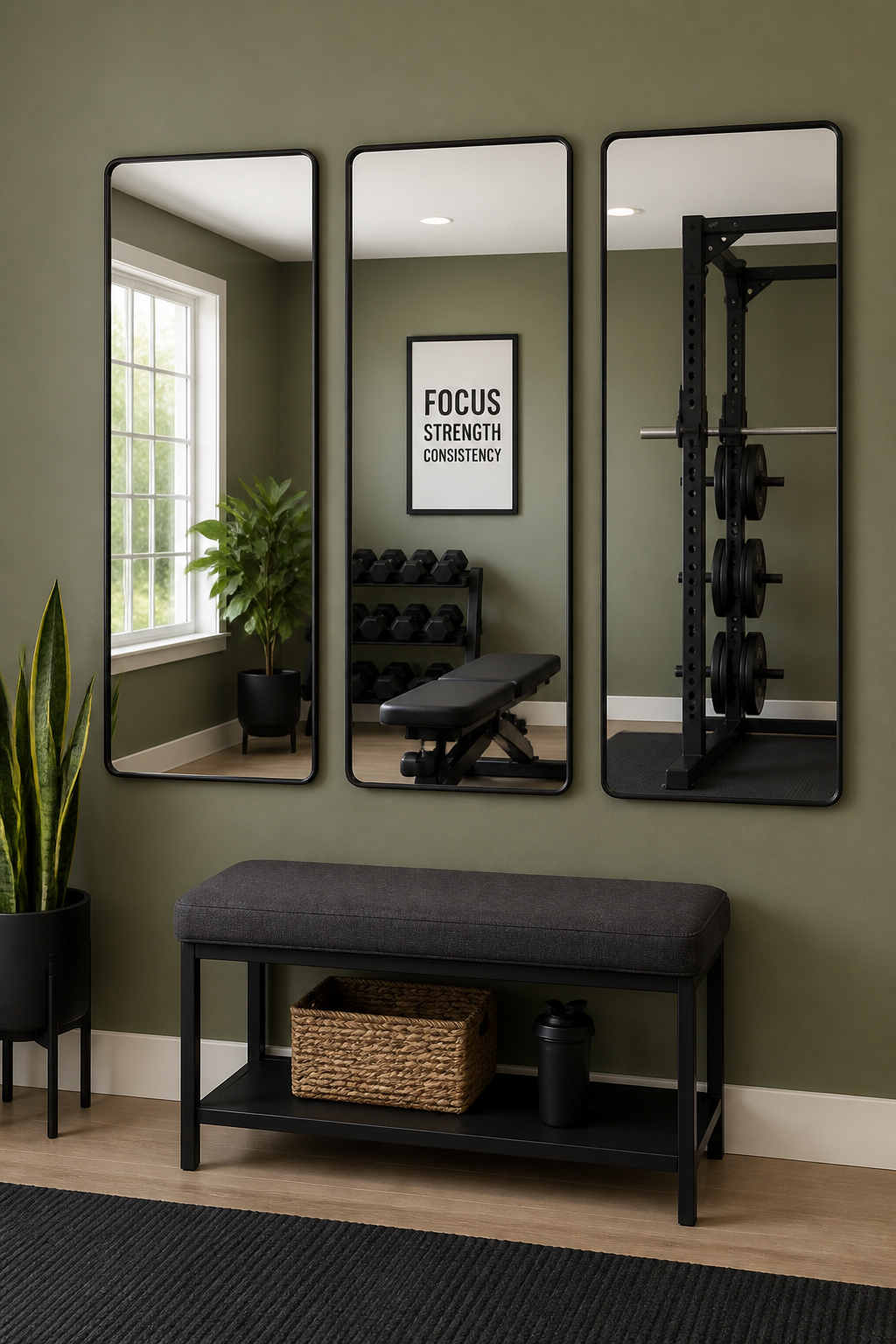
Instead of a full mirror wall, I hung three framed mirrors at eye level. It looks more polished and reduces the "gym" glare. I used a 36-inch round mirror and a couple of rectangular frames. Mistake: mirrors too low — align center at 60–65 inches for most people.
Wood-Look Floating Shelves for Gear and Decor
Style/Vibe: Organic Minimalist
Budget: $ (under $100)
Best For: Storage + display

White oak floating shelves make a functional wall feel curated. I stack towels, small kettlebells, and a plant for warmth. Use shelf brackets rated for weight. Mistake: cluttering every shelf — leave breathing room with odd-number groupings.
Dedicated Recovery Corner With Bench and Plants
Style/Vibe: Spa-Like Calm
Budget: $ (under $150)
Best For: Post-workout recovery
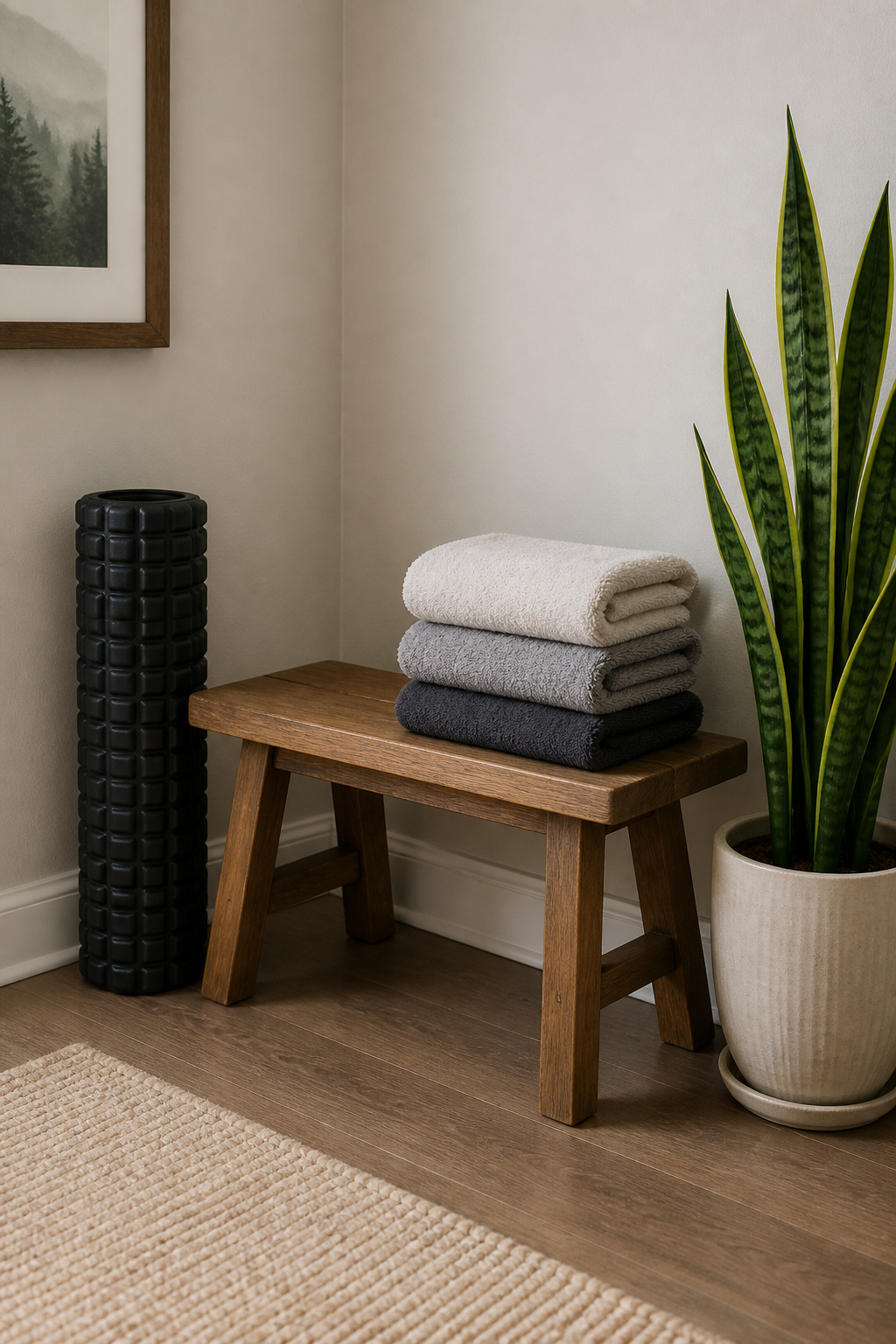
I carved out a recovery nook with a bench, foam roller, and calming greenery. A microfiber towel set and soft lighting make it inviting. Mistake: placing it where equipment noise is loud — choose a quieter corner.
Wall-Mounted Storage for Bands, Mats, and Ropes
Style/Vibe: Utilitarian + Tidy
Budget: $ (under $120)
Best For: Small basements
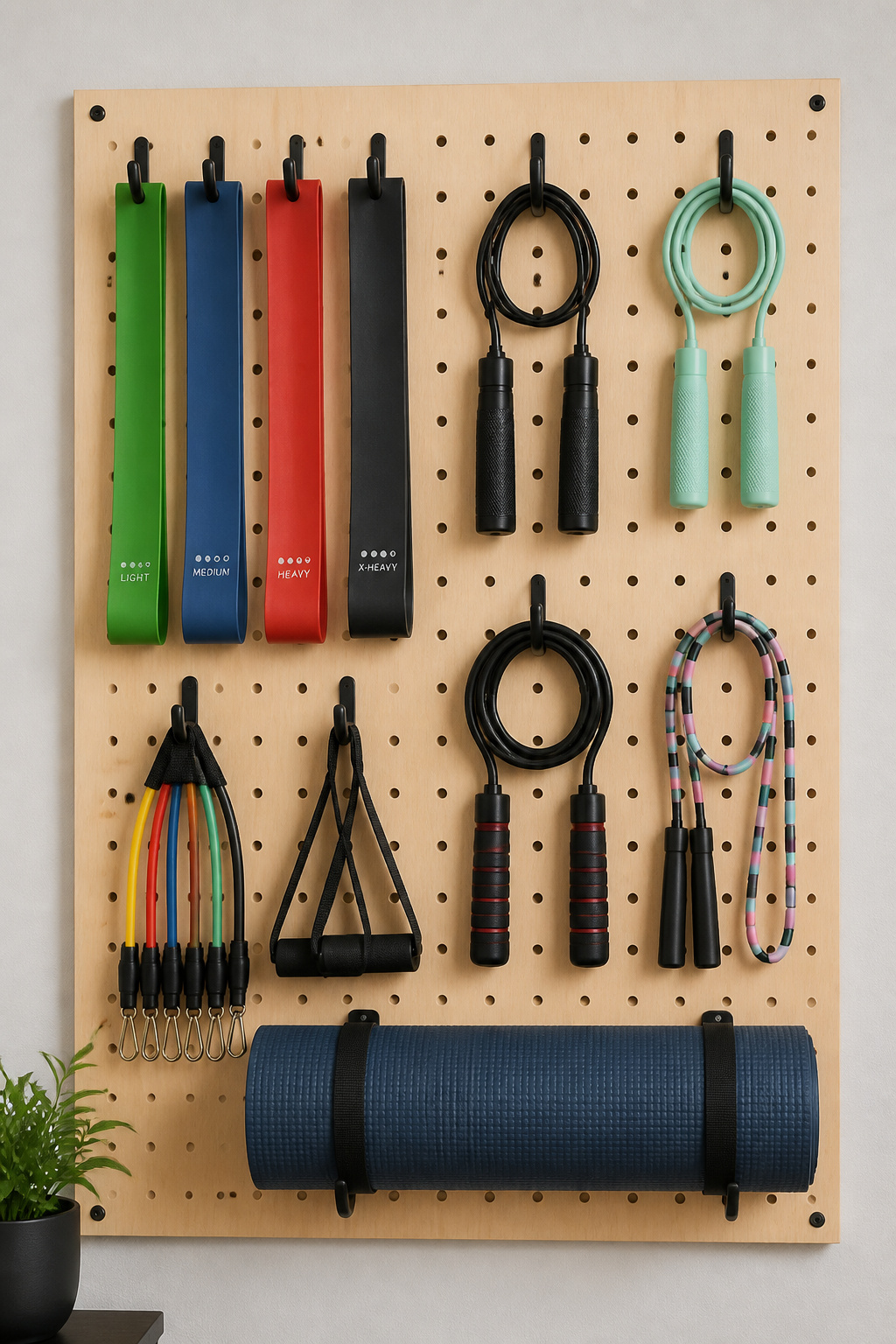
Wall storage keeps gear off the floor and visible. I installed hooks and labeled baskets — everything has a home. Use wall-mounted storage racks. Mistake: overloading hooks beyond weight rating.
Layered Lighting: Recessed + Task Pendant
Style/Vibe: Bright + Focused
Budget: $$ (under $200)
Best For: Dark basements
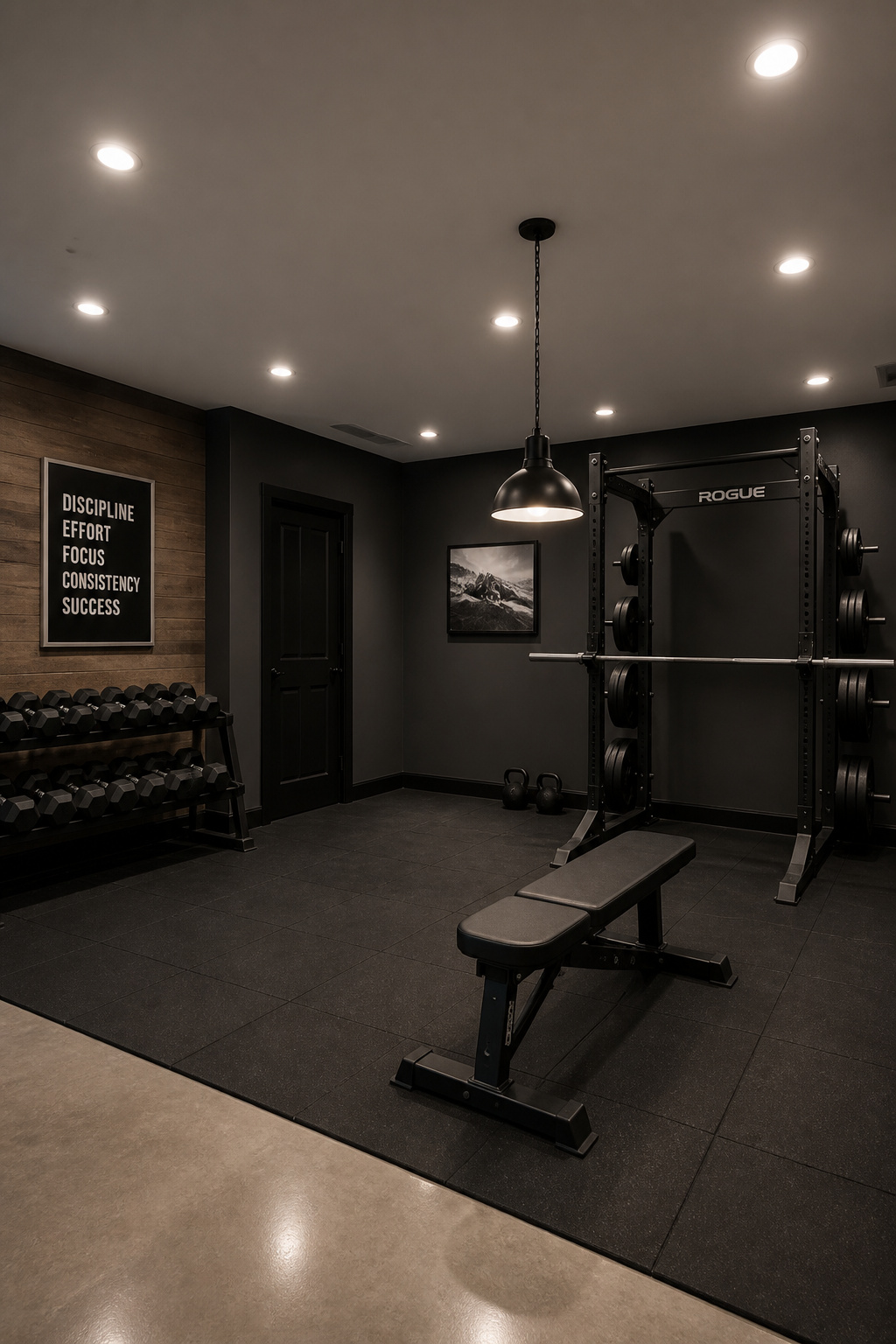
Recessed lights brighten the whole space; a pendant over the bench creates focus. I added LED pucks for dimmable task lighting. Use bulbs with 4000K for a neutral workout tone. Mistake: using warm 2700K bulbs that make the space feel sleepy.
Durable Accent Wall With Vinyl or Chalkboard Panels
Style/Vibe: Playful Functional
Budget: $ (under $100)
Best For: Motivation wall or class tracking
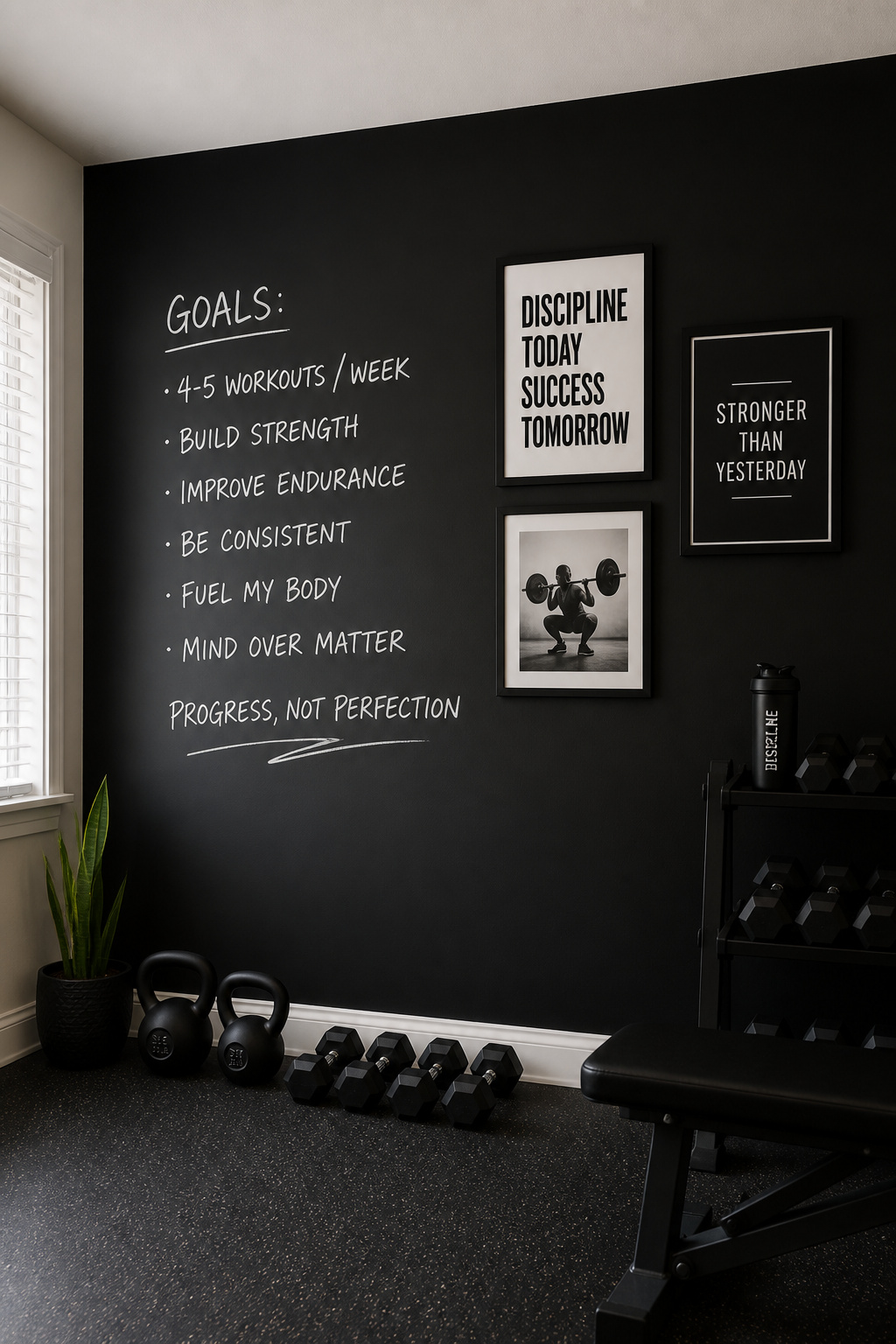
I installed a wipeable vinyl panel to track workouts and goals. It’s practical and looks intentional. Try peel and stick panels. Mistake: using delicate paint that marks easily.
Warm Wood Accents to Soften Industrial Elements
Style/Vibe: Organic-Industrial
Budget: $$ (under $200)
Best For: Any basement
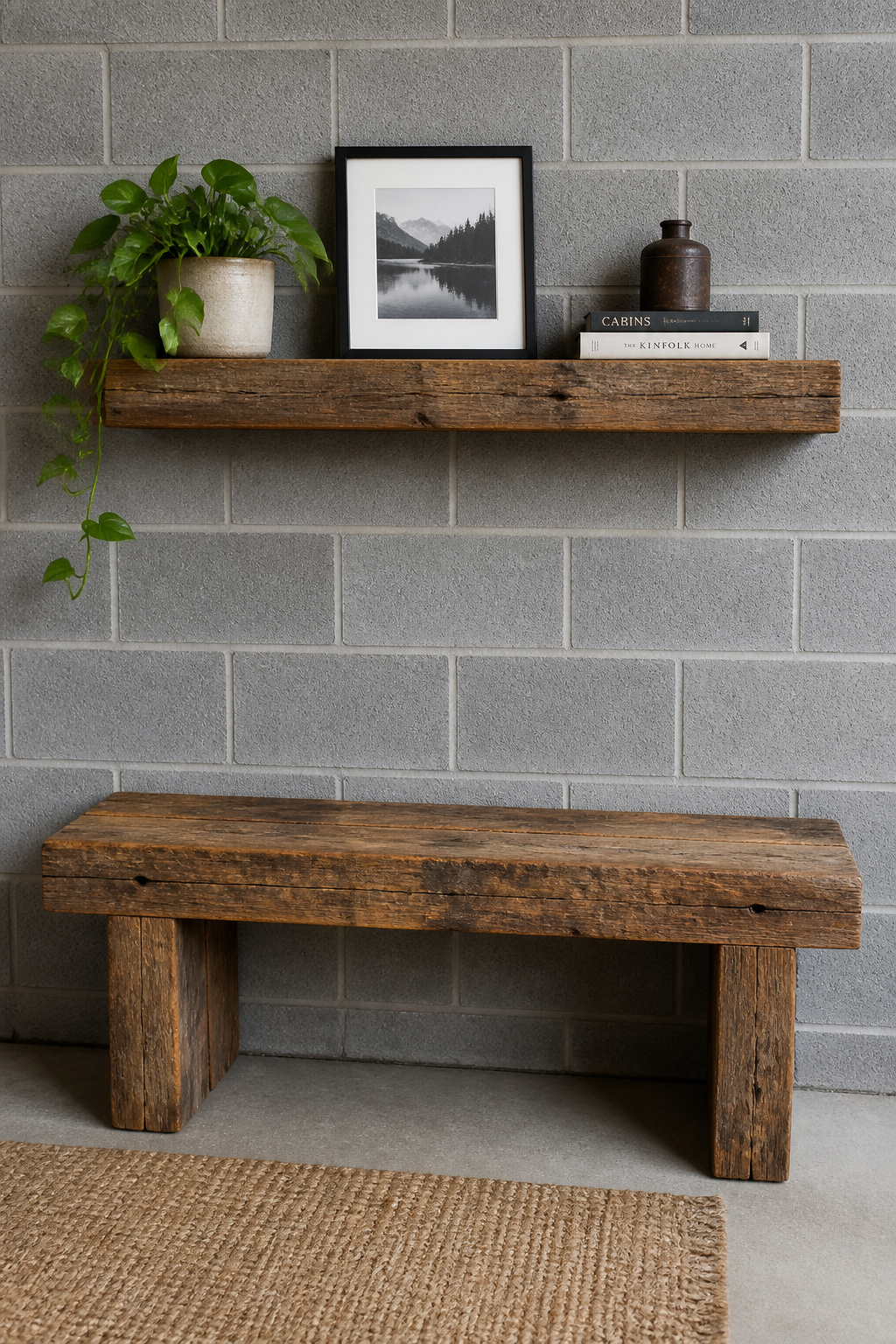
Natural wood tones counterbalance rubber flooring and metal. I used a slim wood bench for seating and storage. Mistake: mixing too many wood finishes — keep to two tones max.
Ceiling-Mounted TRX or Suspension Area
Style/Vibe: Performance-Focused
Budget: $$ (under $150)
Best For: Bodyweight training

I bolted a suspension anchor into a beam and kept a clear 6-foot radius. TRX-style straps are compact and versatile. Mistake: installing in drywall only — always hit a joist or use proper anchors.
Hidden AV and Soundproofing Elements
Style/Vibe: Low-Noise Studio
Budget: $$$ (under $500)
Best For: Loud equipment or shared homes

Rubber flooring plus acoustic panels tame noise. I used adhesive acoustic tiles and a slim soundbar for music. Acoustic foam panels help neighbors and household peace. Mistake: relying only on carpets — they don’t stop impact noise.
Rolling Storage Cart for Small Gear
Style/Vibe: Practical + Mobile
Budget: $ (under $75)
Best For: Multi-user homes
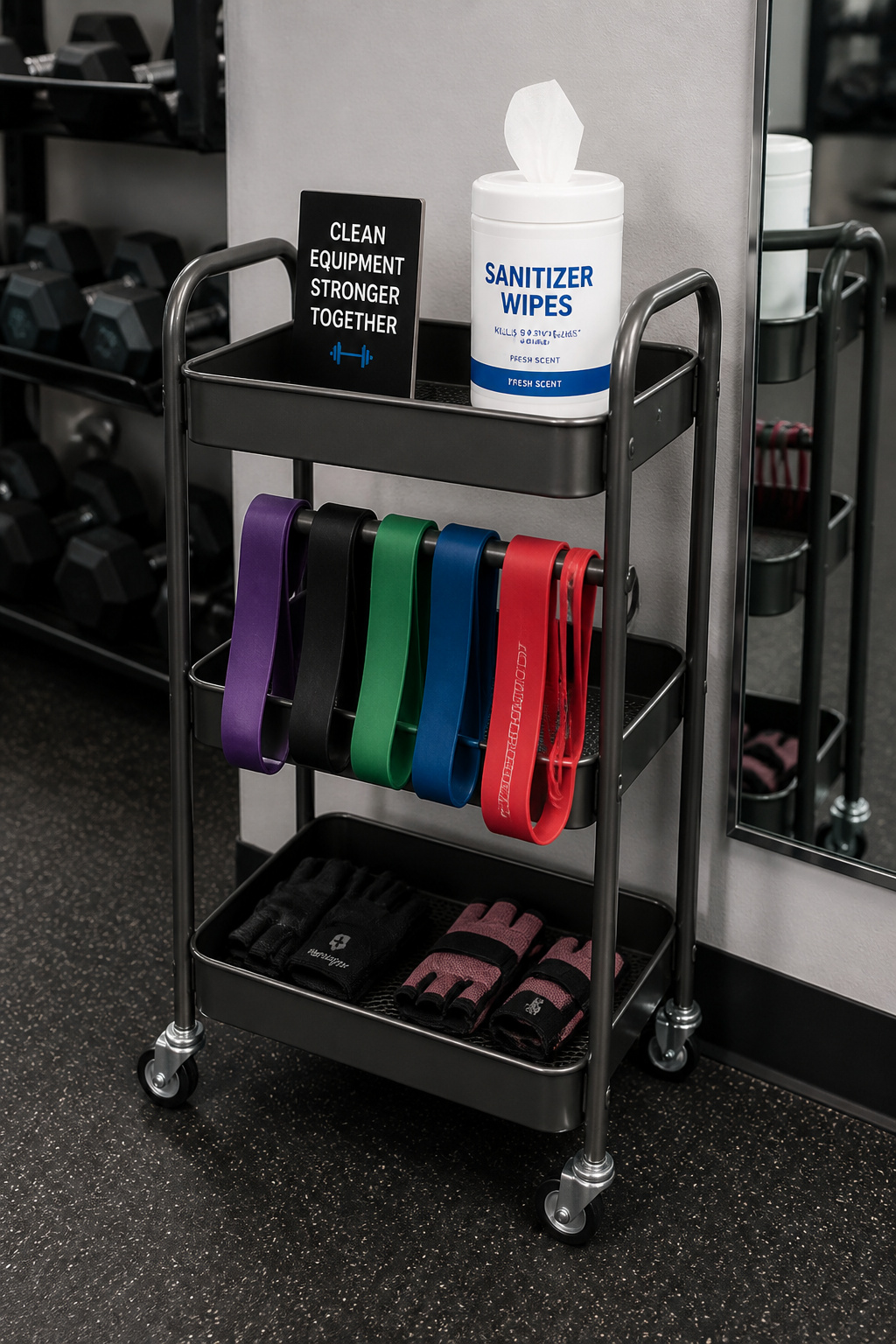
A slim rolling cart stores props and moves close when needed. I keep sanitizer and wipes on the top shelf. Mistake: using an unstable cart that tips under weight.
Minimalist Color Palette With One Accent Hue
Style/Vibe: Modern Minimalist
Budget: $ (under $100)
Best For: Calm workout vibe
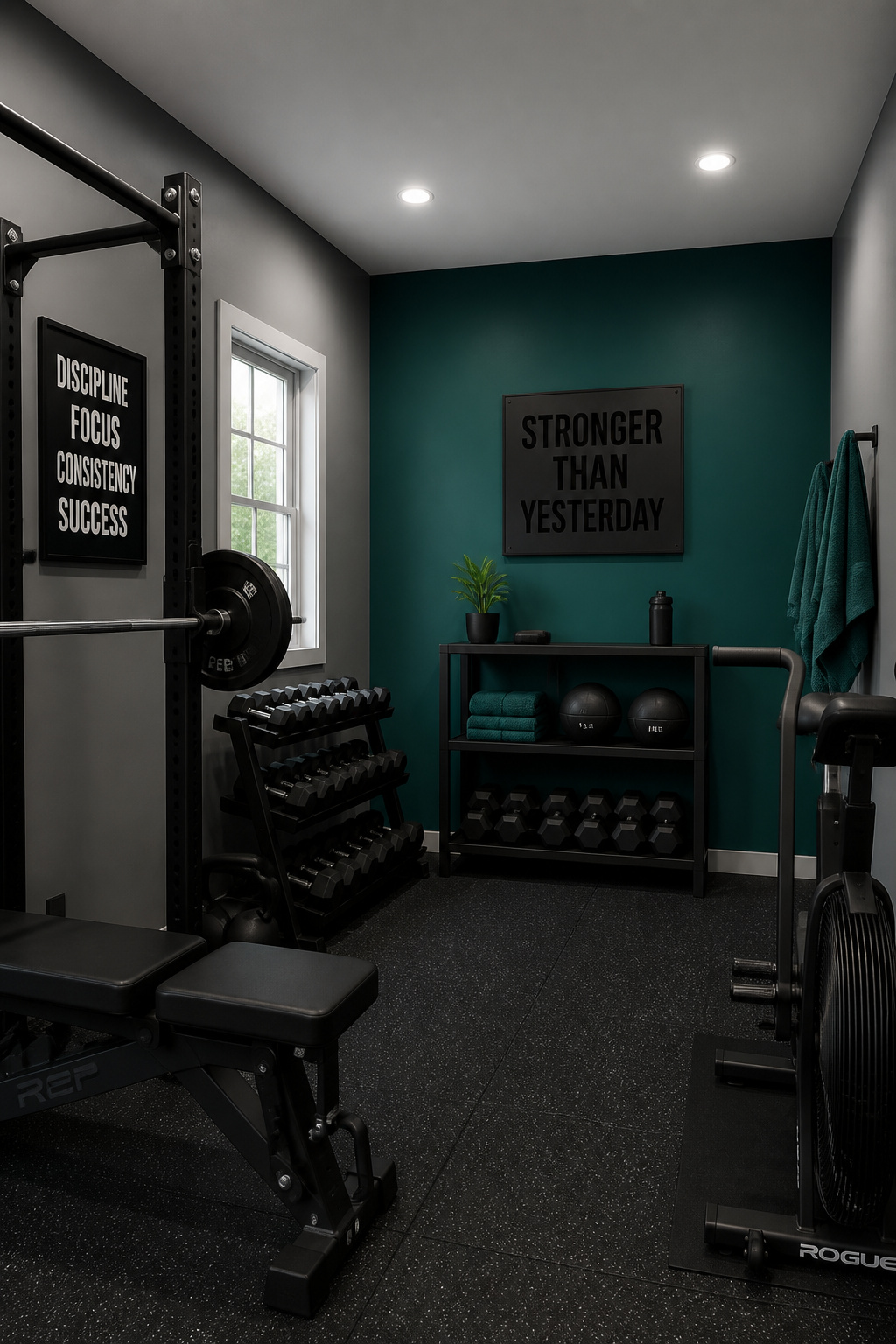
I stuck to grays, black, and wood, and introduced one accent color via towels and a mat. This keeps the space focused. Mistake: too many bright colors competing for attention.
Compact Fold-Down Bench or Wall-Mounted Rack
Style/Vibe: Space-Saving
Budget: $ (under $200)
Best For: Tiny basements
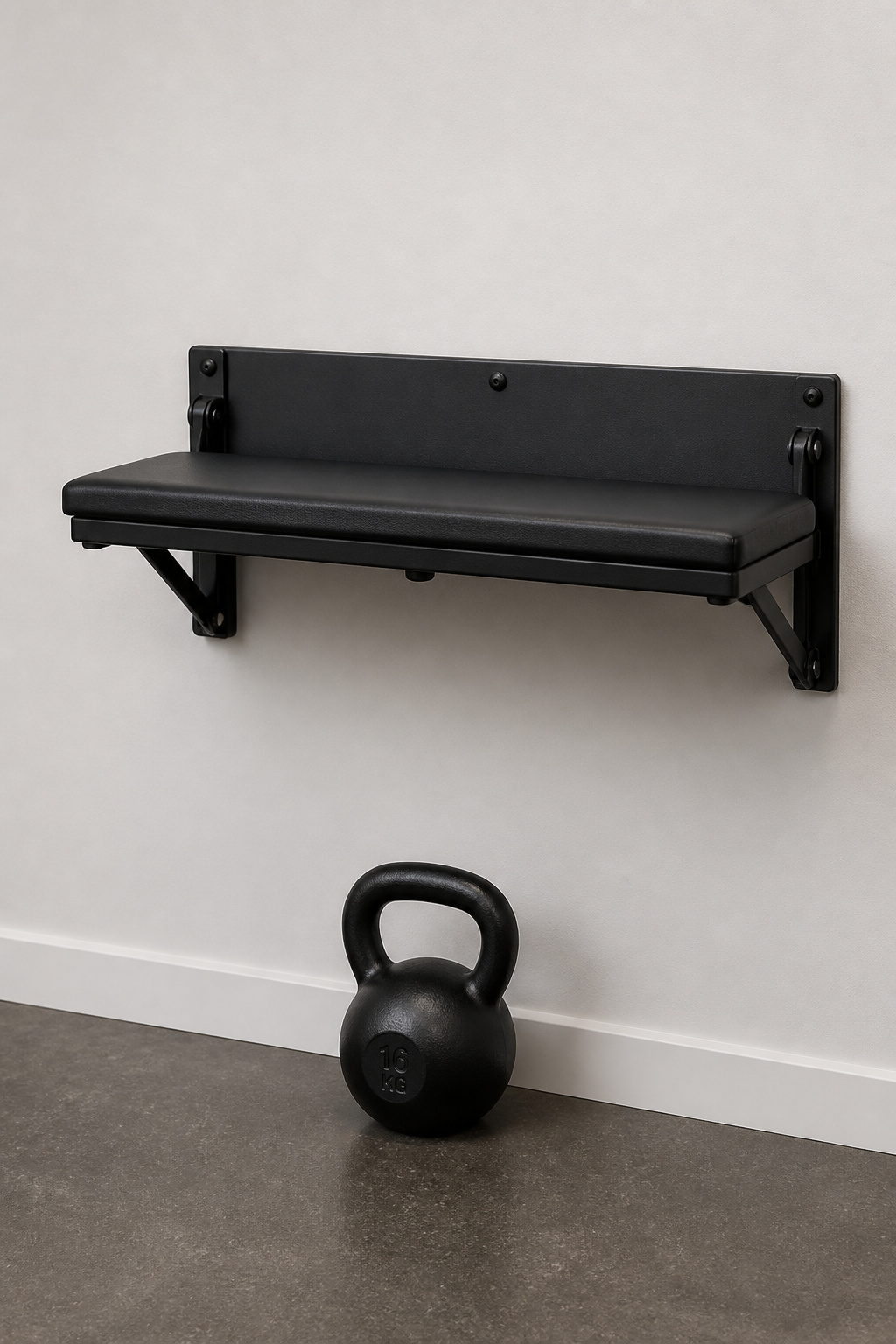
A fold-down bench frees floor space when not in use. I used a folding wall bench search. Mistake: neglecting clearance when folding.
Shopping Tips for These Looks
- Buy versatile flooring: Choose rubber gym tiles for noise reduction and durability.
- One big plant: Order a 6-foot fiddle leaf fig for scale.
- Invest in storage: A wall-mounted storage rack prevents clutter.
- Match light temp: Use 3500–4000K LEDs for clear, natural workout lighting.
- Thrift soft goods: Towels and baskets at HomeGoods, backup on Amazon like gym towels.
Frequently Asked Questions
Q: How do I soundproof a basement gym?
A: Start with rubber flooring (rubber gym floor tiles) and add wall acoustic panels (acoustic foam panels). Seal doors and add a heavy curtain.
Q: What’s the best lighting for workouts?
A: Use cool-neutral LEDs (3500–4000K). I used LED recessed puck lights for even coverage.
Q: Can a basement feel inviting?
A: Yes. Add wood accents, plants, and layered lighting. A large mirror helps the room feel bigger.
Q: Are artificial plants OK?
A: Absolutely. A quality 6-foot faux fiddle leaf fig adds life without maintenance.
Q: How much should I budget?
A: A functional, tidy basement gym can start under $300 (flooring + storage + key accessories). Mid-range setups run $500–$2,000 depending on equipment.
I started small — new flooring, one plant, and a mirror — and it changed how I use the room. Pick one zone to fix first, try a rubber tile sample, and build from there. Which corner of your basement are you tackling first?