I used to trip over bands and step on a rogue kettlebell every time I wanted to do a quick workout. My garage gym felt cramped and unusable. I spent about $420 reworking the layout and storage. Now I can move through a circuit without clearing a path first. If you’re wondering how to organize a home gym space for real-life use, this is what worked for me.
Quick context
This guide is for functional-industrial home gyms—garages, basements, or spare rooms. Plan $300–$700 depending on flooring and storage choices. The focus follows 2026 trends: vertical storage, zoned rubber flooring, and compact foldable gear to keep the space efficient and inviting.
What You'll Need for This Look
Foundation:
- Rubber floor tiles, 2×2 ft interlocking (~$80-150 for a 6×8 area) — buy enough to cover movement zones.
- Full-length gym mirror panel, 24×72 inch (~$100-200) — one wall or a mirrored strip.
Vertical storage & racks:
- Pegboard wall panel kit, 4×8 ft (~$60-120) — mounts gear high and clear.
- Heavy-duty wall hooks set for gym equipment (~$15-35) — for ropes, bands, TRX.
Weights & gear:
- Plate tree vertical holder 3-post (~$70-150) — keeps plates off the floor.
- Adjustable dumbbells set, compact pair (~$150-350) — replaces many fixed sets.
Foldable & hidden:
- Foldable weight bench, adjustable (~$120-250)
- Storage bench with compartment, 36-inch (~$60-120) — hides mats and small gear.
Lighting & finishing:
- Recessed LED light strip, dimmable, 6 ft (~$40-90)
- Gym wall clock with silent sweep, 12-inch (~$20-40)
Budget swap:
- Skip a full mirror and get mirror tiles, 12×36 inch to build a strip for under $60.

Secure the foundation: rubber flooring and zoned layout

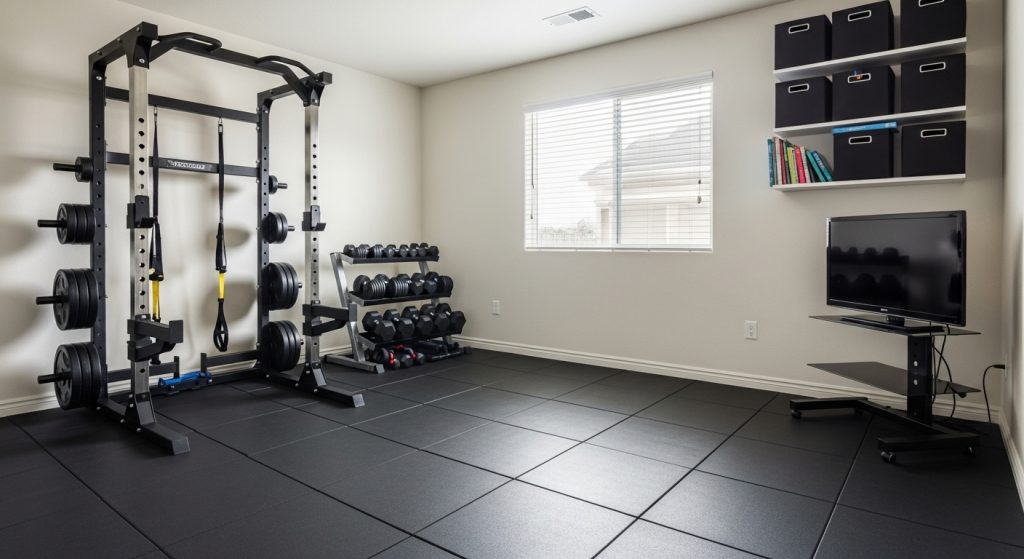
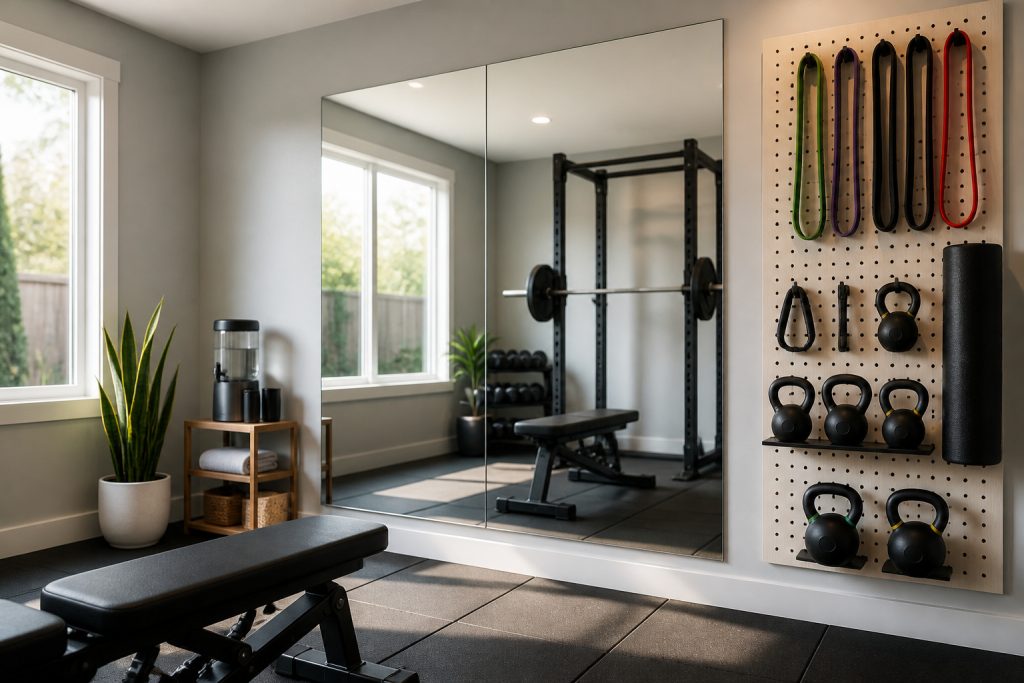
Flooring must come first. I installed interlocking rubber floor tiles in a 6×8 area and marked zones for cardio, lifting, and mobility. The tiles protect the floor and cut noise. I placed the weight zone near the wall with the full-length mirror so form checks are easy. Mirror placement also helps light bounce around in a dim garage.
Visual rule: leave a 3–4 ft clear center for movement. Tape the zones first to test flow. A common mistake is covering the whole floor with mats; that looks bulky and eats storage space. Start with targeted zones that match how you train.
Free the floor: vertical storage and a power wall for easy access

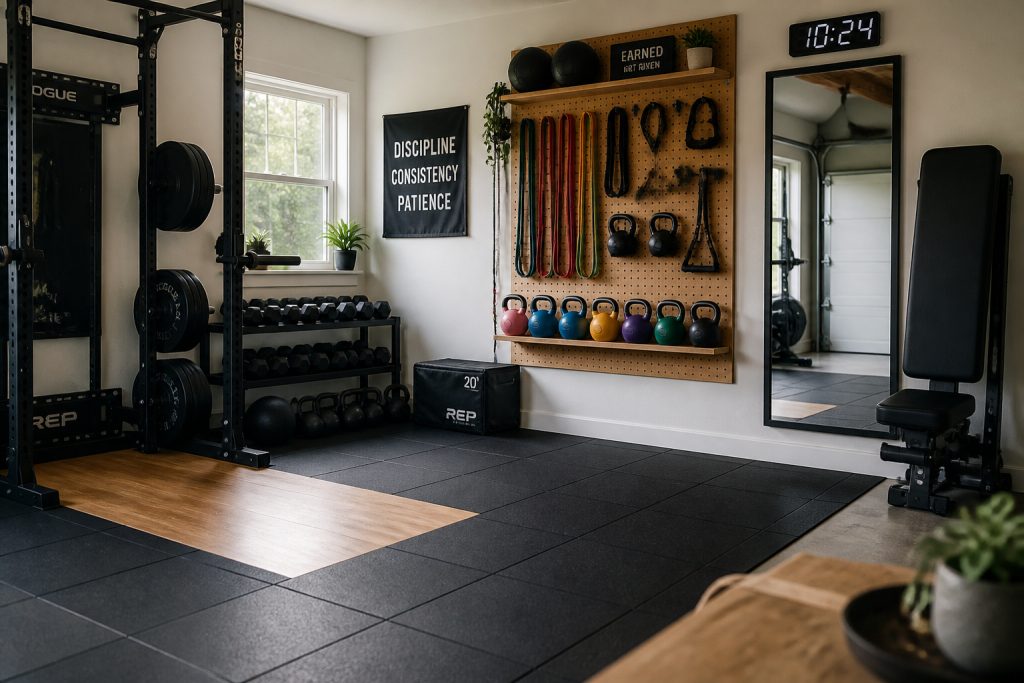
I swapped a freestanding rack (it boxed the room in) for a 4×8 pegboard wall panel kit. Hooks hold kettlebells, bands, and a jump rope. I added heavy-duty wall hooks for barbells and a plate tree in the corner. Everything is at eye or shoulder height, so I can grab or return gear without stepping away from my movement path.
Spacing tip: keep 12–18 inches between items on the pegboard. Group by function—bands and mobility tools together, kettlebells by weight. This vertical approach solved my floor clutter and made circuits faster.
Make it usable daily: foldable gear, hidden storage, and layered lighting

Daily use wins over rare perfection. I use a foldable weight bench that stores against the wall. My adjustable dumbbells sit on a low storage bench with compartment so they’re easy to reach but not in the way. I installed a dimmable recessed LED strip above the mirror for bright warm light during workouts and a softer setting for cool-downs.
What failed: I bought an expensive freestanding shelving unit and it dominated the sightline. I sold it and chose hidden storage instead. Small choices like foldable gear and covered bins make the room feel intentional and stay tidy between sessions.
Common Styling Mistakes to Avoid
Mistake: piling heavy gear on the floor
Why it doesn't work: blocks movement and looks chaotic
Do this instead: use a plate tree and wall hooks to keep floor clear.
Mistake: no mirror for form checks
Why it doesn't work: you miss niggling technique errors
Do this instead: add a full-length mirror panel or mirrored tiles.
Mistake: poor lighting that makes the space feel like a basement cave
Why it doesn't work: kills motivation and hides hazards
Do this instead: install dimmable LED strips and use warm bulbs for cool-downs.
Shopping Guide: Where to Find These Items
- For budget flooring, search Amazon for rubber floor tiles interlocking. They’re cheaper than rolls and easy to swap.
- Need compact weights? Try adjustable dumbbells compact set. They replace many pairs.
- For vertical storage, look for pegboard wall panel kit 4×8 and add heavy-duty wall hooks.
- Want a tidy bench? Search storage bench with compartment 36 inch to hide mats and bands.
Final tip
Start with the floor and one vertical wall. That two-step change cleared my space and made workouts effortless. If you pick one thing today, pick targeted rubber tiles. Which zone will you set up first?